top of page
Search

by Nelson Santos @Info | February 7, 2026


DOST

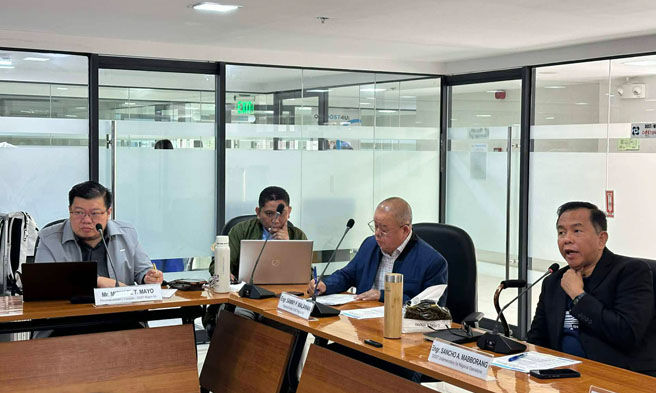
Photo: DOST reaffirms its commitment to advancing peace through science and technology—building stronger, more resilient communities and contributing to a peaceful and progressive Mindanao.


Lanao del Sur and Lanao del Norte — The Department of Science and Technology (DOST) has strengthened its peacebuilding efforts in Mindanao through the delivery of science- and technology-based interventions in six previously acknowledged Moro Islamic Liberation Front (MILF) camps. This initiative underscores the government’s commitment to inclusive development in former conflict-affected areas.


Led by DOST Secretary Renato U. Solidum Jr., the program was formalized through the ceremonial turnover of technologies and the signing of a Memorandum of Agreement for the project titled “Empowering the Six Previously Acknowledged MILF Camps in Mindanao through the Provision of Science and Technology Interventions.” Activities were held at Camp Bushra in Butig, Lanao del Sur, and Camp Bilal in Tangcal, Lanao del Norte.


The initiative is implemented in partnership with Member of Parliament Basit “Jannati Mimbatas” Abbas, MILF Chairman of Camp Bushra and representative of the Joint Task Forces on Camps Transformation, and the Office of the Presidential Adviser on Peace, Reconciliation and Unity (OPAPRU), headed by Secretary Carlito G. Galvez Jr., who was represented during the event by Presidential Assistant David B. Diciano.


MP Abbas shared that beneficiaries expressed happiness upon learning about the initiative and warmly welcomed the support. He described the program as distinct from other government interventions because of its strong grassroots reach and the personal presence of DOST leadership, which helped strengthen trust and partnership within the communities.


The activity was attended by DOST Undersecretary for Regional Operations Engr. Sancho A. Mabborang, Undersecretary for Special Concerns Dr. Teodoro M. Gatchalian, and DOST SOCCSKSARGEN Regional Director and Project Leader Engr. Sammy P. Malawan, reflecting the Department’s unified support for peace-oriented development.

The initiative covers Camp Bushra, Camp Bilal, Camp Badre, Camp Omar, Camp Abubakar, and Camp Rajahmuda. Interventions were developed in close coordination with local leaders and community members to ensure cultural sensitivity, sustainability, and responsiveness to local priorities.


Key interventions focused on health, water, education, and livelihoods. These include the installation of six solar-powered Level II water systems serving more than 300 households, the deployment of SAFEWATRS water treatment technologies, and the conduct of food safety training, Halal compliance orientation, and basic nutrition activities.


In education, six STARBOOKS Learning Hubs equipped with Starlink connectivity were established, benefiting over 600 learners and educators. Meanwhile, science-based livelihood technologies—such as food processing, dressmaking, weaving, abaca production, and aquaculture initiatives—directly supported more than 300 community members and strengthened local economic self-reliance.


All technologies and facilities were designed with disaster risk reduction and climate resilience considerations, utilizing solar-powered and energy-efficient systems.


Capacity-building activities were conducted from July to October 2025, covering food processing, aquaculture, livestock production, vegetable farming, and enterprise development. Follow-through mentoring and enterprise strengthening activities are scheduled for 2026 to ensure long-term sustainability.


According to Secretary Solidum, “Science is for peace and development,” emphasizing that science provides communities with the tools needed to build sustainable and productive lives.


The initiative is implemented in close coordination with OPAPRU, the Government of the Philippines Peace Implementing Panel, the Joint Task Force for Camps Transformation,

local government units, and community leaders.


Through this program, DOST reaffirms its commitment to advancing peace through science and technology—building stronger, more resilient communities and contributing to a peaceful and progressive Mindanao.


by Info @Brand Zone | January 21, 2026


𝐀𝐦𝐚𝐬, 𝐊𝐢𝐝𝐚𝐩𝐚𝐰𝐚𝐧 𝐂𝐢𝐭𝐲 | The Department of Science and Technology (DOST) SOCCSKSARGEN Project SARAi team, paid a courtesy visit to the Office of Vice Governor Rochella Marie Ella Taliño Taray, on January 12, 2026, at Amas, Kidapawan City. This is part of its continuing engagement with provincial and local leaders to strengthen science- and technology-driven agriculture in North Cotabato.


The discussion highlighted how Project SARAi—Smarter Approaches to Reinvigorate Agriculture as an Industry in the Philippines—can support evidence-based planning and policy formulation for the province’s agricultural sector. The team shared how climate, crop, and data analytics generated by SARAi can be translated into practical tools that guide farmers and local decision-makers in improving productivity and climate resilience.


Vice Governor Taliño-Taray welcomed the initiative and stressed the importance of integrating smart agriculture solutions into provincial development programs, noting that access to timely and science-backed information is crucial in empowering farmers and safeguarding livelihoods amid changing climate conditions.


The meeting also opened discussions on the Knowledge, Innovation, Science and Technology (KIST) Park/Ecozone Program, emphasizing its potential role as a hub for agri-innovation, research collaboration, and technology commercialization in the province. North Cotabato’s participation in the KIST Park/Ecozone orientation held in June 2025 was cited as an initial step toward fostering an enabling environment for innovation-led growth.


The courtesy visit reaffirmed the shared commitment of DOST SOCCSKSARGEN, led by Regional Director Engr. Sammy P. Malawan, and the Provincial Government of Cotabato, headed by Governor Emmylou Lala Taliño-Mendoza, to advance sustainable agriculture and innovation through strategic partnerships and science-based solutions


by Joy Calvar @DOST Gates Program | January 9, 2026


DOST

By Joy Calvar, DOST Gates Program - Representatives from the Department of Science and Technology (DOST) gathered from December 2 to 4, 2025, for the “Collaborate, Translate, Transform” seminar-writeshop to strengthen the department’s capacity to turn research and data into bankable project proposals and evidence-informed policies. Conducted in collaboration with UNDP Philippines, UP-NCPAG, and NRCP, the initiative aims to harness DOST’s wealth of information for strategic actions that contribute to national development. (Photo by John Kenneth Fraga, DOST Gates Program)


The Department of Science and Technology (DOST) is taking significant strides toward strengthening its capacity to transform technical data and research insights into bankable project proposals and evidence-informed policies that drive national development.


The initiative was led by the Office of the Assistant Secretary for Development Cooperation and the Geospatial Analytics and Technology Solutions (GATES) Program, in collaboration with the United Nations Development Programme (UNDP) Philippines, experts from the University of the Philippines - National College of Public Administration and Governance (UP NCPAG), and the National Research Council of the Philippines (NRCP).


A Vision for Data-Driven Governance


In his speech, DOST Secretary Renato U. Solidum, Jr. emphasized that the department's goal is to evolve into an agile, data-driven, and future-ready organization that transforms information into national value. He underscored that decisions must be firmly grounded in evidence to ensure they align with global cooperation priorities and national development goals.


"Data must be connected. It must speak a common language. It must move from information to insight to action," Secretary Solidum stated. "As the Department that leads innovation, we must also lead in harmonization, integration, and translation".


Strengthening Proposal Development for Global Competitiveness


In collaboration with the UNDP Philippines, the first two days of the series focused on developing high-impact project proposals.


Experts guided participants through problem framing and stakeholder mapping to create a pipeline of project concept notes addressing three strategic areas: human capital development, innovation and economic development, and climate change and disaster risk reduction.


UNDP Resident Representative Knut Ostby noted that improving the ability to leverage Official Development Assistance (ODA) and external financing positions science and technology initiatives as catalysts for private-sector engagement and domestic investment.


“This is about scaling innovations where they are needed most,” Otsby said.


DOST Assistant Secretary for Development Mr. Rodolfo J. Calzado, Jr. also encouraged participants to further develop their group outputs into full draft concept notes, as these will serve as a preparatory step for the proposed one-on-one coaching sessions with the UNDP team scheduled to begin in the early months of 2026, refining the outputs into investment-ready project concept notes.


Bridging Research to Policy and Open Data


The final day of the series, conducted with experts from the UP-NCPAG, focused on the research-to-policy landscape.


Participants explored pathways to translate technical findings into actionable insights for national and sectoral policies while discussing the institutionalization of open data to advance good governance and transparency


Asec. Calzado, Jr. concluded that while the DOST system generates a wealth of geospatial data and technical knowledge annually, impact only occurs when that data is translated into strategic, people-centered action.


By maximizing the use of its organizational data through the GATES Program, DOST continues to reinforce its commitment to a data-driven government that provides solutions and opportunities for all Filipinos.


Through the "Collaborate, Translate, Transform: Seminar and Writeshop Series on Partnership and Proposal Development, Research Translation, and Policy Development," held from December 2 to 4, 2025, the Department gathered representatives from its Central Office and attached agencies to bridge the gap between information generation and actionable results.


GATES Program is one of the eight banner research and development programs of the Department of Science and Technology (DOST) aimed at providing science-based, innovative, and inclusive solutions across four strategic pillars: human well-being, wealth creation, wealth protection, and sustainability. These pillars embody the mantra OneDOST4U: Solutions and Opportunities for All. For more information, visit www.dost.gov.ph.


RECOMMENDED
bottom of page